A customs entry is a legal declaration.
Not paperwork. It is a statement to a government about what your goods are, what they are worth and where they came from — and you carry the liability for it, whoever filed it. We keep clearance in-house so that liability sits with people we manage.
Four ways customs costs you money
None of these are exotic. They are the ordinary failures that turn a predictable shipment into an unpredictable bill, and every one of them is preventable before the goods move.
Underpaid duty gets reclaimed later with interest and penalty. Overpaid duty is rarely refunded unless you go and ask for it.
Codes reviewed against the actual product and its intended use — not copied forward from whatever the last shipment used.
Goods sit at the border while the file is corrected. Storage, demurrage and detention accrue daily and are not negotiable afterwards.
Documents prepared and cross-checked against each other before departure, so errors surface while they are still cheap.
Charges land on whichever party did not expect them, usually after the goods have already shipped and nobody can change it.
Terms confirmed at quotation, before the purchase order is placed, so both sides know who pays what and where risk passes.
Seizure and fines at minimum. Sanctions and dual-use breaches carry personal and criminal exposure, not just commercial.
Sanctions, denied-party and licence screening run before a booking is accepted, not after the container is loaded.
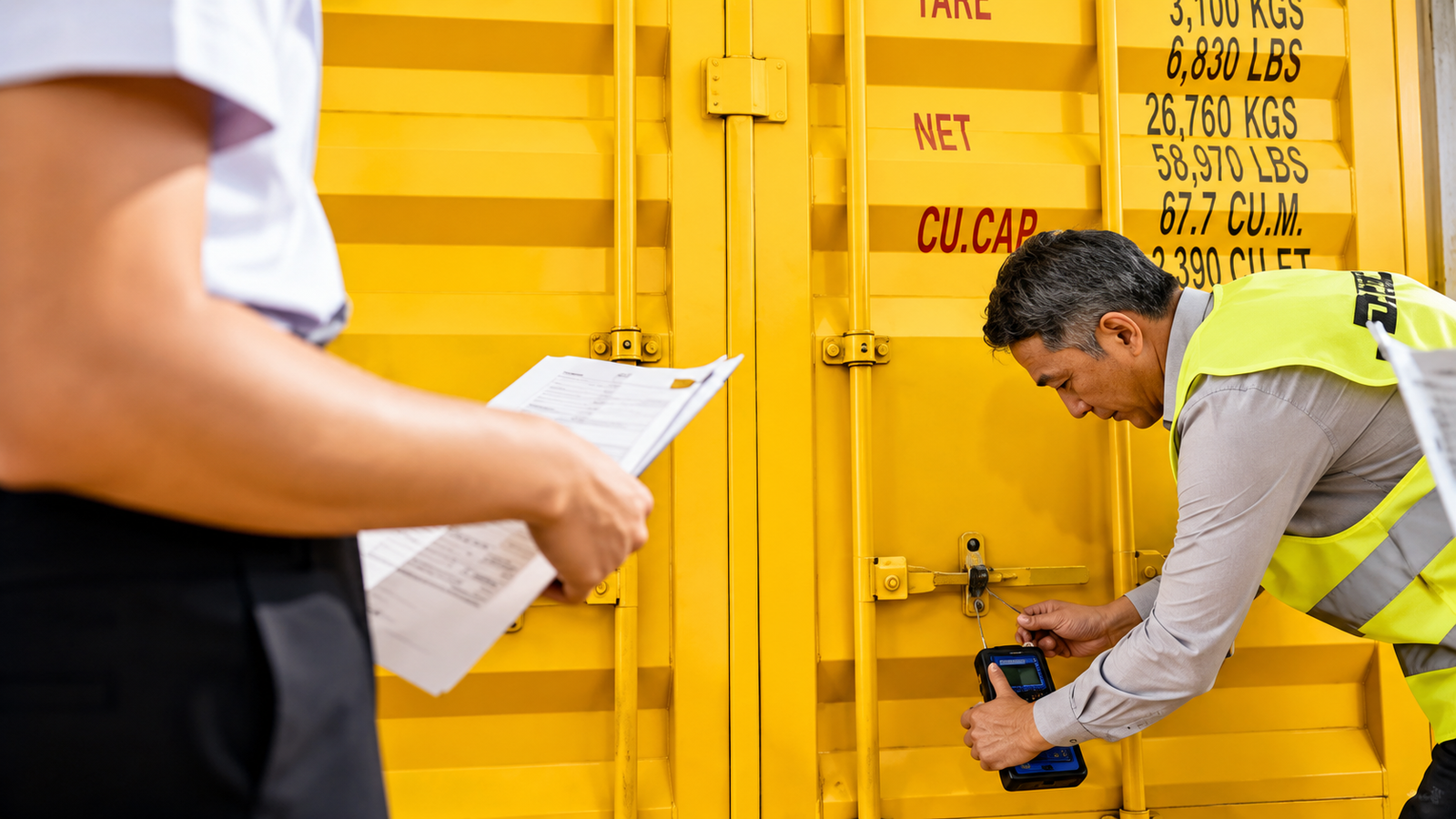
What clearance actually involves
Six decisions, each of which has to be right and defensible if the entry is ever questioned.
Classification
Assigning the tariff code that determines the duty rate, the controls that apply and whether a licence is needed at all.
Valuation
Establishing the customs value, including which freight, insurance, royalties and assists have to be added to the invoice price.
Origin
Determining where goods legally originate, which decides duty rate and whether preferential trade agreements can be claimed.
Licences & controls
Checking whether the goods, the destination or the end user trigger export controls, sanctions or a permit requirement.
Entry & declaration
Filing the declaration with the authority, answering queries, and holding the supporting file in case the entry is later audited.
Duty & tax settlement
Calculating what is payable, arranging deferment where available, and releasing the goods against payment or guarantee.
What to have ready before you ship
Most border holds trace back to something on this list being missing, inconsistent with another document, or produced after the goods arrived.
- Commercial invoice Full description, value, currency, incoterm and both parties' details.
- Packing list Piece count, weights and dimensions that agree with the invoice.
- Bill of lading or air waybill The transport document, issued once the goods are handed to the carrier.
- Certificate of origin Where the destination requires it, or where you are claiming preference.
- Import or export licence For controlled, dual-use, or restricted commodities.
- Dangerous goods declaration Required for regulated cargo, with correct UN number and packing group.
- Preferential origin evidence Supplier declarations supporting any trade agreement claim.
- Authority to act Direct or indirect representation, allowing us to declare on your behalf.
The part that saves money rather than time
Clearing a shipment is the minimum. The work below is what separates a broker who files entries from one worth having.
-
Duty deferment and reclaim
Deferring payment where a scheme allows it, and recovering overpaid duty that would otherwise stay with the authority indefinitely.
-
Bonded and special procedures
Holding goods under customs control, or using inward and outward processing where duty can legitimately be suspended or avoided.
-
Classification review
Periodic audit of the codes you are using. Long-standing product ranges are frequently declared under a code that stopped being correct years ago.
-
Audit trail
Entries, supporting documents and correspondence retained and retrievable, so a customs audit is an afternoon's work rather than a crisis.

Three ways to use this
You do not have to move your freight with us to use our brokers, and you do not have to hand over everything at once.
Built into your freight
Clearance included in the shipment we are already moving, at both ends of the lane. One booking, one reference, one invoice — and one party accountable if the border holds it.
Brokerage only
Your existing forwarder moves the freight, our brokers handle the entry. Common where a customer is happy with their carrier but not with how clearance is being handled.
Review and advisory
A look at the codes, valuations and procedures you are already using, before you change anything. Frequently pays for itself out of the first reclaim it uncovers.
Send us a code you are unsure about.
Genuinely — that is usually the fastest way to find out whether this is worth a conversation. Tell us the commodity, the lane and the code you are declaring under now, and we will tell you whether we would use the same one.

- Track
-
Start ShippingGet a Quote Ship Now Request a Business AccountDocument & PackageExpress Shipping Retailers / Volume ShippingFreightExplore Freight Services OPS for Your Business
- Customer Service
- Customer Portal Logins
- Check Out What OPS Provides