Everything upstream is judged at one door.
A shipment can cross four countries perfectly and still be remembered as a failure because nobody was in at two in the afternoon. The final leg is the only part your customer actually experiences — and the only part they will describe to anyone else.

Scanned into the network, with the recipient notified that it is on its way.
Moving between depots. Quiet, and the stage where nothing should need saying.
Loaded to a round. This is where the promise gets narrow and options open up.
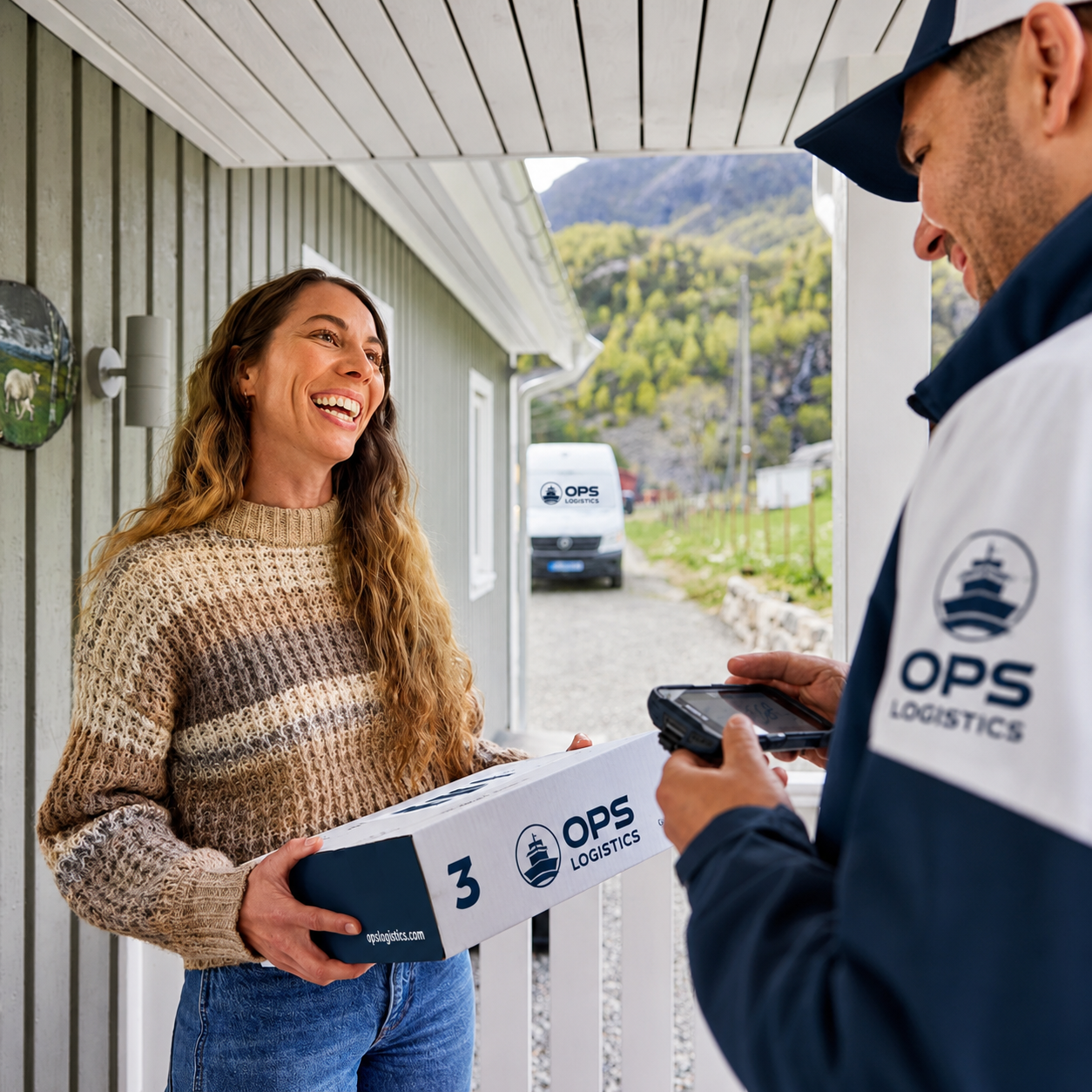
Proof captured at the door and written straight back into your system.
How narrow can you afford to be?
Every step down this ladder costs more to run and fails less often. The right answer is not the tightest window — it is the tightest window your margin supports on that product, which is a conversation rather than a tariff.
Give people a way to say what suits them
Most failed deliveries are not operational failures. They are a person who was at work, and a system that never asked. Every option below removes a reason for the round to come back with the parcel still on it.
Signature required
For high value or age-restricted goods, where handing it to a person is the point of the service.
Safe place
A location the recipient nominates, with a photograph captured where it was left as the proof.
Neighbour
Delivered nearby with a card left at the door. Cheap to offer and it recovers a lot of otherwise failed rounds.
Collection point
Diverted to a staffed location the recipient chooses, on their schedule rather than the driver's.
Booked slot
Chosen before the round is built, so the route is planned around the appointment rather than the other way round.
Change in flight
Redirected after despatch. The single most effective option, because it works at the moment the person realises they will be out.
What happens when the door does not open
This is the part most carriers describe vaguely and most customers only discover once it has gone wrong. It should be the clearest thing on the contract.
Handed over, left in the agreed safe place, or taken by a neighbour. Proof captured.
Card left, recipient notified immediately with the options open to them.
Recorded with a reason code and routed back rather than reattempted blindly.
- Reattempt — on a day the recipient picks, not simply the next working day.
- Divert — to a collection point or neighbour, chosen from the notification.
- Hold — kept available for collection for a period agreed on your account.
- Return — sent back to you with a reason code, so the pattern can be fixed.
The van is already there
A returns journey that starts with the customer finding a printer, a box and a post office is a returns journey that ends in a complaint. The vehicle is outside their house twice a week anyway.
Collection on delivery
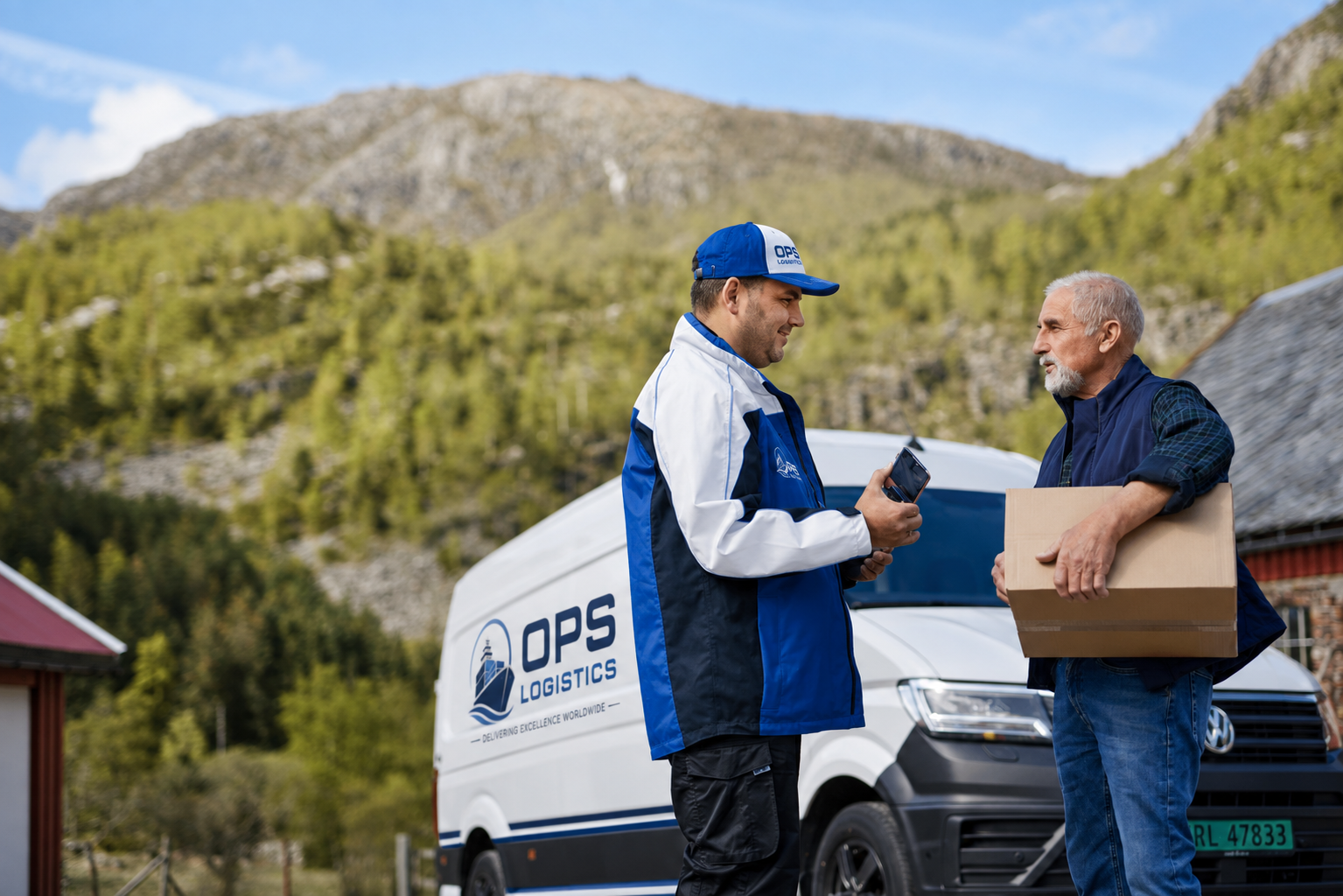
The old item taken away as the new one is handed over. One visit, one van, and nothing left in a hallway for a fortnight.
Booked doorstep collection
Arranged by the customer for a day that suits them, on the same rounds already running that street.
Paperless returns
No printer required — the label is produced at collection, which removes the single most common reason returns stall.
Scanned at the door
The return is confirmed the moment it is picked up, so you can trigger the refund without waiting for it to reach a warehouse.
Tell us where your deliveries fail.
Which postcodes, which products, which time of day, and what your customers complain about most. That is a far more useful starting point than a volume forecast — the failure pattern tells us what to change, and it is usually not the thing people expect.

- Track
-
Start ShippingGet a Quote Ship Now Request a Business AccountDocument & PackageExpress Shipping Retailers / Volume ShippingFreightExplore Freight Services OPS for Your Business
- Customer Service
- Customer Portal Logins
- Check Out What OPS Provides