One envelope. One box. Same care as a container.
A signed contract, a passport, a spare part holding up a line, a sample a customer is waiting on. Small things with disproportionate consequences — collected from your door and delivered to theirs, tracked the whole way.

Document or parcel is not a size question
It is a customs question, and it is the first thing that changes how your shipment is handled. Paper with no commercial value travels differently from anything a border can put a price on — even if the box is smaller.
-
A document
Paper with no resale value — contracts, certificates, deeds, tender submissions. Usually the simplest customs treatment there is, because there is nothing to value or classify.
-
A parcel
Anything with commercial value, however small. It needs a description, a value and a commodity code, and it can attract duty and tax in the destination.
-
The trap
Putting a sample, a USB drive or a promotional item in with paperwork turns a document into a parcel. Declared as documents, it will be stopped — and the delay costs more than declaring it would have.
Why a light box can cost more than a heavy one
The single most common surprise on an express invoice, and it is not a mistake. Aircraft run out of space long before they run out of lift, so express services price on whichever of two numbers is larger.
What the scales say when the packed box goes on them.
A weight derived from the space the box occupies. Length by width by height, divided by a set figure.
Which is why a box of cushions costs more to fly than its scales suggest, and why trimming an oversized carton down to the size of its contents can cut a bill more than removing items would.
Three answers, and the middle one matters most
Most refused shipments are not people trying to send something forbidden. They are people who did not know an ordinary item needed declaring.
Documents and general goods
Paperwork, clothing, books, most consumer items, spare parts and samples. Described and valued honestly, these move without difficulty.
Anything containing a battery
Phones, laptops, tools, toys, power banks. Regulated as dangerous goods, with rules that differ depending on whether the battery is loose, in the device or packed beside it.
Liquids, aerosols and cosmetics
Perfume, nail varnish, some cleaning products. Frequently regulated by air even in small quantities, and frequently sent by people who had no idea.
Food, plants and anything biological
Subject to import controls that vary enormously by destination. Some countries refuse items others wave through without comment.
High-value items and jewellery
Not prohibited, but they change the routing, the security handling and the cover you need. Under-declaring to save duty voids the insurance you were relying on.
Cash, negotiable instruments and precious metals
Not carried on express services. There are specialist providers for this and we will point you to that conversation rather than take the booking.
Live animals, human remains and hazardous waste
Outside what an express network handles. Each requires specialist carriers, permits and handling that a parcel service is not built for.
Counterfeit goods and anything illegal at either end
Refused, and where required reported. This includes items legal where you are and not where they are going — the destination's law governs.
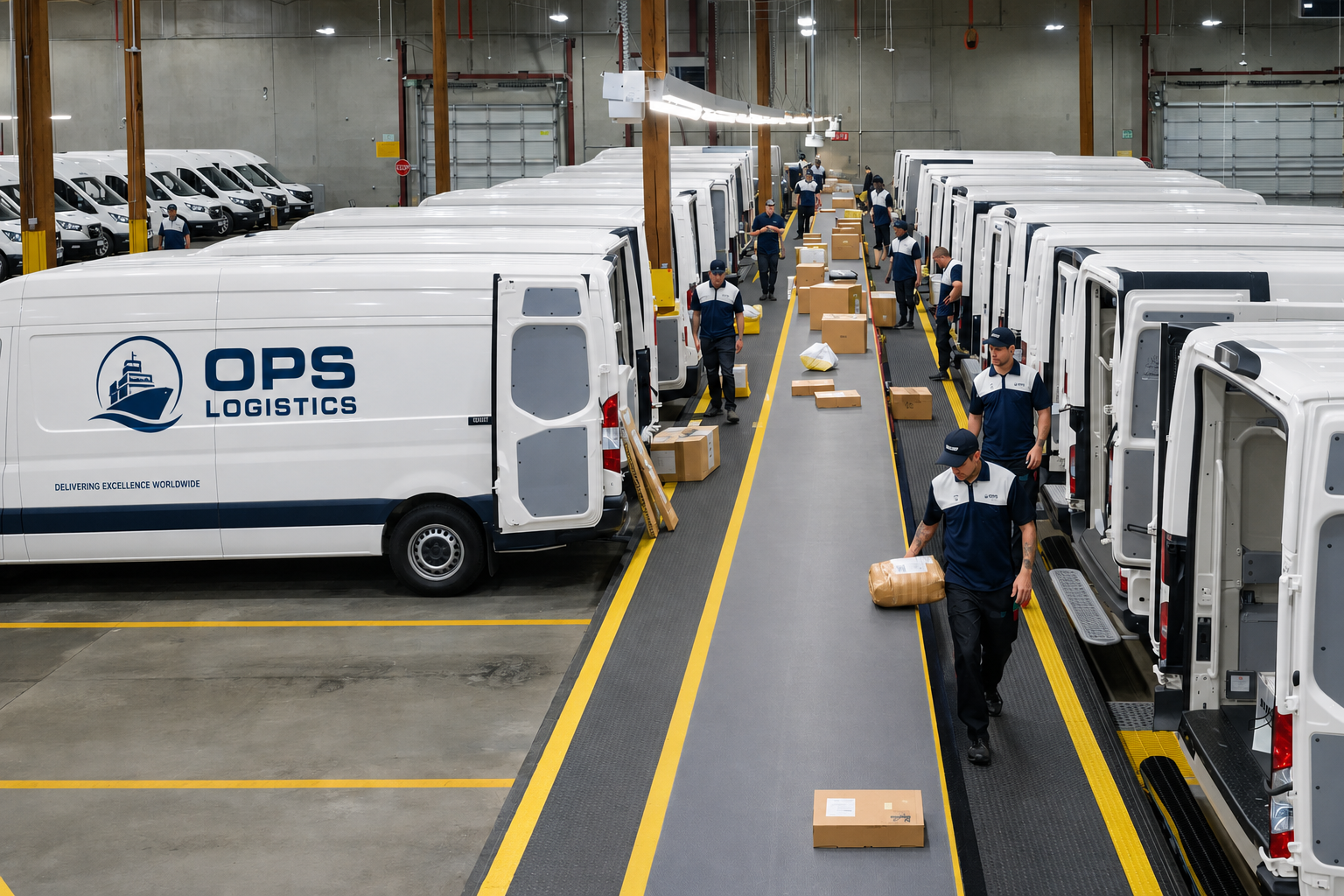
Assume it will be at the bottom of the stack
Express parcels are sorted mechanically, moved on belts and loaded with hundreds of others. Nothing here is exotic — it is the difference between a claim and a delivery.
-
Rule 01A new box, not a reused one Cardboard loses most of its strength after one journey. An old box with old labels also gets scanned wrongly more often than people expect.
-
Rule 02Nothing touching a wall Cushioning on every side, including underneath. Damage almost always starts at a corner that had nothing behind it.
-
Rule 03No movement when shaken If contents shift, they will shift for the whole journey. Fill the voids rather than adding a bigger box — that costs you volumetric weight too.
-
Rule 04Tape every seam Across the middle and along both edges. Parcel tape, not household tape, and never string or wrapping paper on the outside.
-
Rule 05The address inside as well as out If a label is torn off in a sorting hub, a copy inside the box is the only thing that reunites it with you.
-
Rule 06Describe the contents accurately On the paperwork, in plain words. "Gift" and "sample" mean nothing to a customs officer and slow the shipment down rather than speeding it up.
Tell us what is in the box before you seal it.
What it is, roughly what it is worth and where it is going. That is enough for us to confirm the service, tell you whether anything needs declaring, and flag it if the box you have chosen is going to cost you more than it needs to.

- Track
-
Start ShippingGet a Quote Ship Now Request a Business AccountDocument & PackageExpress Shipping Retailers / Volume ShippingFreightExplore Freight Services OPS for Your Business
- Customer Service
- Customer Portal Logins
- Check Out What OPS Provides