When the cargo will not fit through the door.
Transformers, turbine sections, drilling equipment, switchgear and cable drums. Freight measured in metres and tonnes rather than pallets, going to sites that frequently had no road until somebody built one.
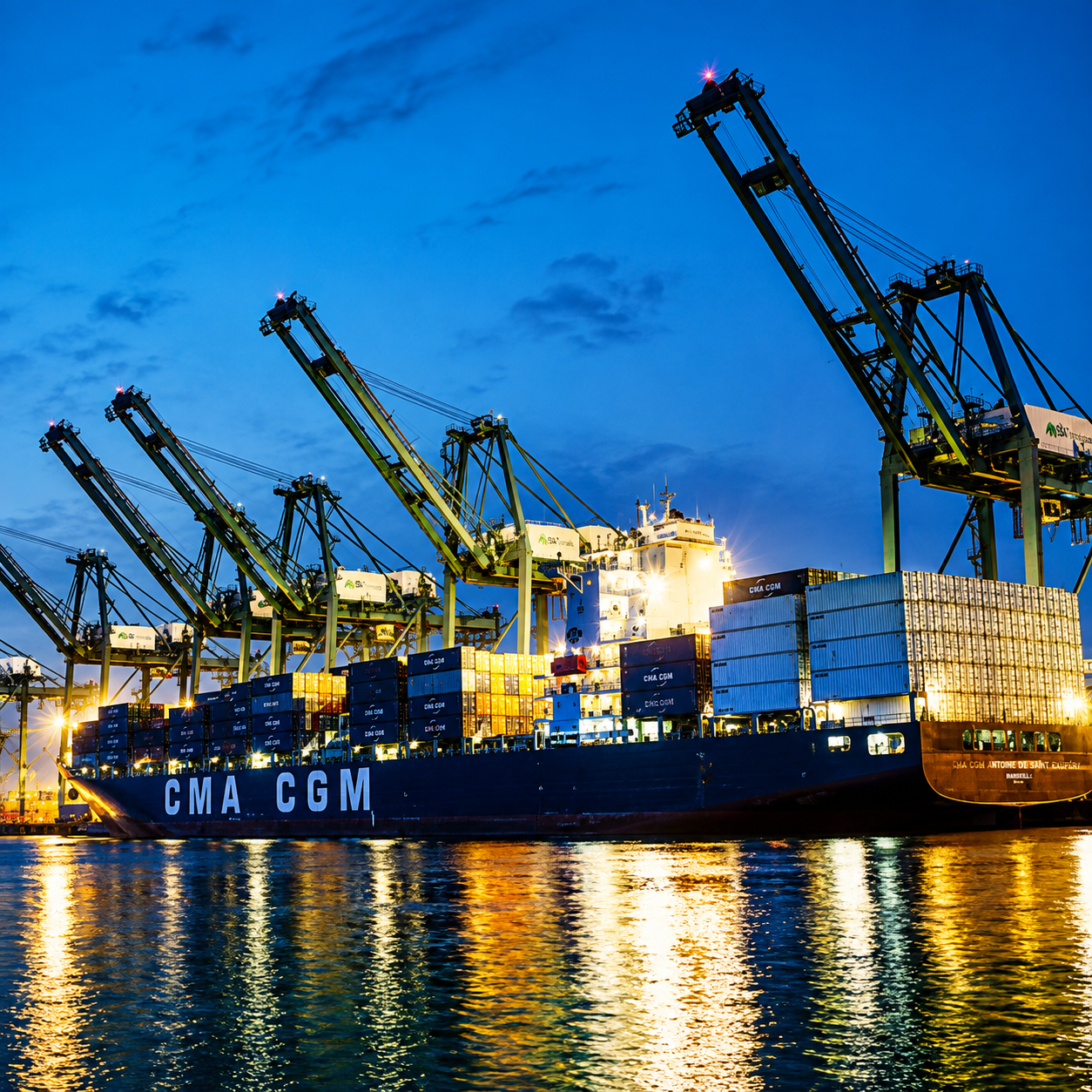
This is why a container price list is useless here
Standard freight is priced against a box. Energy cargo routinely does not fit in one, and the moment it does not, everything changes — the vessel, the trailer, the route, the permits and the crane at the far end.
The move is the short part
People assume a project cargo job is mostly transport. It is mostly the months before it — surveying, permitting and agreeing a method with everyone whose road, bridge or airspace you are about to use. Those phases overlap, which is the whole reason the planning starts early.

Everything that can stop a load
An abnormal load route is surveyed physically, not on a map. These are the things that get found — and each one has to be answered before a permit is issued, not after the trailer is already on the road.
What it travels on
Selected against the drawing and the route, in that order. The right trailer for the cargo is worth nothing if it cannot get down the last two kilometres.
Flat rack & open top
For cargo that exceeds container internal dimensions but still fits within a slot footprint. Priced case by case, never off a tariff.
Break bulk & heavy lift vessel
Cargo carried in the hold or on deck, lifted by the vessel's own gear. Sailings are less frequent, so the schedule drives the programme.
Roll-on roll-off
Wheeled or trailer-mounted cargo driven aboard. Avoids a lift entirely, which for some equipment is the deciding factor.
Low loader & step frame
Reduced deck height for tall cargo, buying back the clearance that bridges and gantries take away.
Modular & extendable trailers
Axle lines added to spread weight, and deck length extended for long single pieces. Configured per load, not per fleet.
Lifting & site handling
Crane, jacking or skidding coordinated at the far end, so the load is not sitting on a trailer waiting for equipment that was never booked.
The last two kilometres
Energy infrastructure is built where the wind blows, the sun falls or the resource sits — which is rarely near a motorway. The final approach is routinely the hardest part of the whole movement, and the part most likely to have been assumed rather than checked.
We survey it before we quote it. Temporary hardstanding, verge reinforcement, a passing place that has to be cut, a wall that has to come down and go back up — those are project costs, and finding them late is how a programme slips.
Offshore adds a weather window on top. Vessel availability, crane limits and sea state decide when a component can transfer, and none of them negotiate. We plan for the window being missed, because sometimes it is.

Send us the drawing, not the description.
Dimensions, weight, centre of gravity, lifting points, origin and delivery site. That is enough for us to tell you whether the route works, what it needs and roughly what it costs — including if the honest answer is that the piece has to be shipped in sections.

- Track
-
Start ShippingGet a Quote Ship Now Request a Business AccountDocument & PackageExpress Shipping Retailers / Volume ShippingFreightExplore Freight Services OPS for Your Business
- Customer Service
- Customer Portal Logins
- Check Out What OPS Provides