Where services stand, and what to do about it.
Conditions across the region can change inside a day. This page carries the current position on the lanes we run, what we are doing about any disruption, and the options open to you — updated on a fixed cycle rather than only when something happens.
What to know before you book
These are the standing operational facts for each market — working week, gateway, and the things that most often catch out a shipper planning their first consignment. They do not change week to week. Live service status is on the banner above and on your booking, because that does.
United Arab Emirates
Mon–FriThe region's largest transhipment gateway, with extensive free-zone capacity. Free-zone entry and mainland import are different customs procedures — goods cleared into a zone are not cleared into the country.
Saudi Arabia
Sun–ThuPorts on both the Red Sea and Gulf coasts, which matters for routing resilience. Many product categories require conformity certification obtained before shipment — the most common cause of delay here, and not recoverable at the border.
Qatar
Sun–ThuServed through a single main deep-water port plus air gateway. Consignee registration and product approvals are checked closely; confirm your buyer holds the right import registration before despatch.
Kuwait
Sun–ThuGulf-coast ports inside the Strait of Hormuz. Import licensing sits with the consignee rather than the shipper, so documentation accuracy at origin determines how fast clearance runs.
Bahrain
Sun–ThuCompact market, frequently served via causeway road links from the wider Gulf as well as directly. Road and sea routings often price very differently for the same consignment — worth quoting both.
Oman
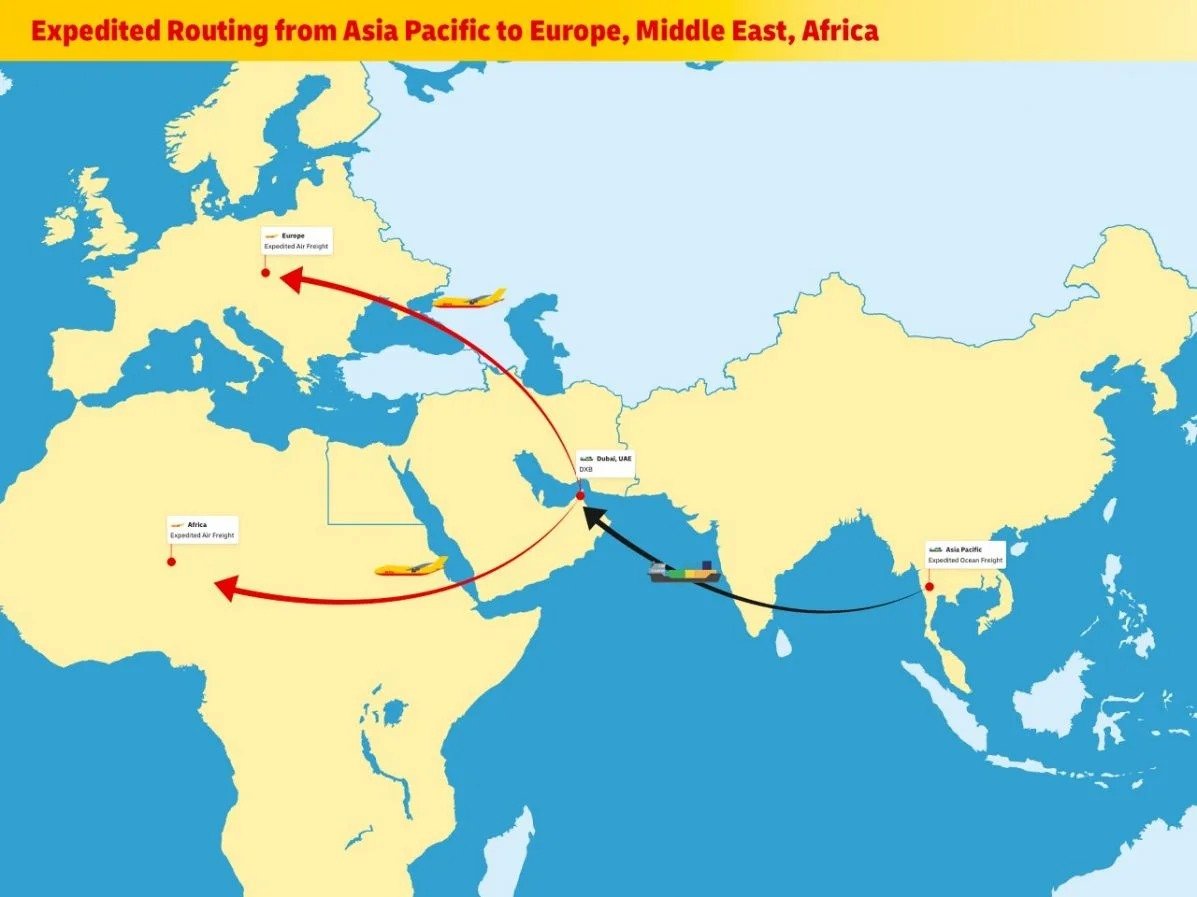
Sun–ThuStrategically useful because its main transhipment port sits outside the Strait of Hormuz on the Arabian Sea. That makes it a genuine alternative gateway when Gulf routings are constrained.
Jordan
Sun–ThuOne seaport, on the Red Sea, so ocean freight here is directly exposed to the Red Sea routing question below. Air and regional road are the usual alternatives when it is constrained.
Red Sea & Suez routing
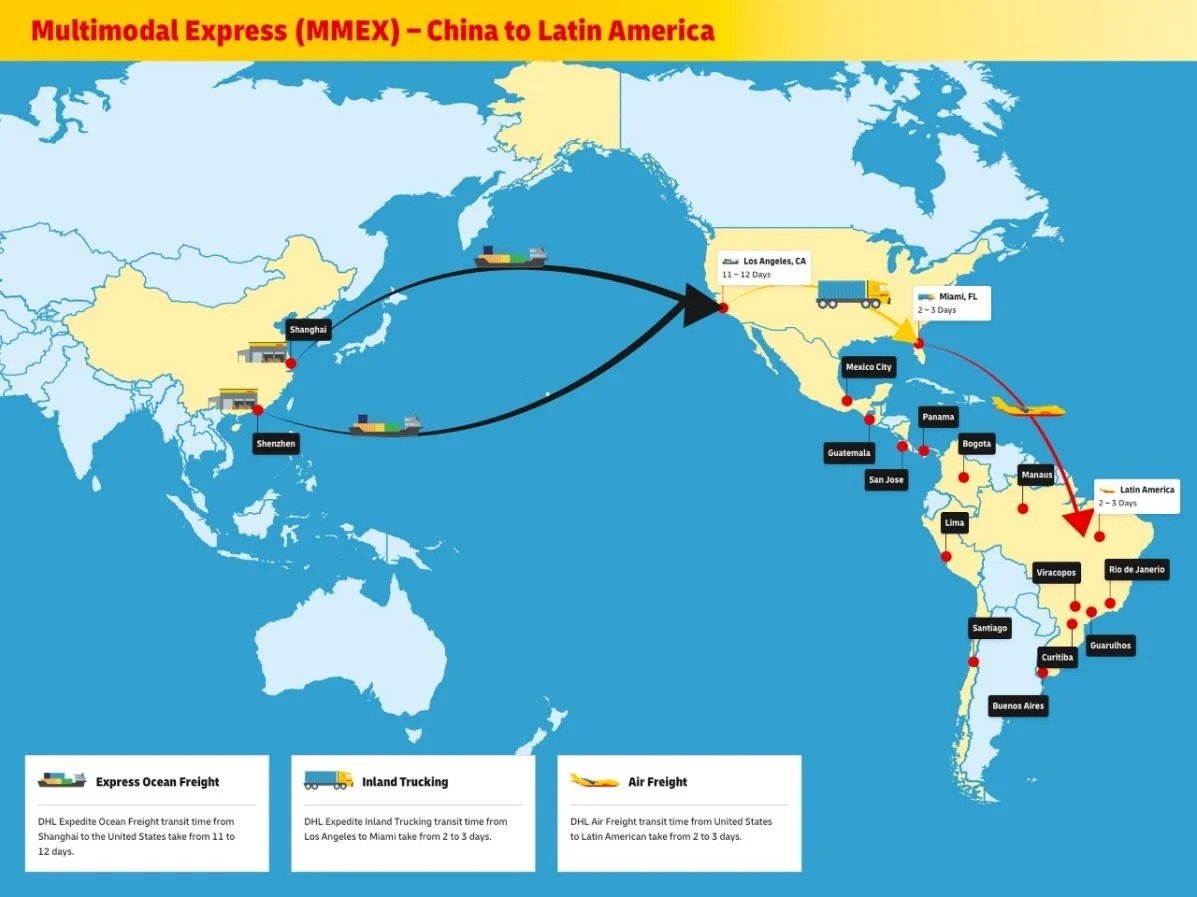
ReducedMost carriers continue routing Asia–Europe services via the Cape of Good Hope. Some services resumed Suez transits during 2026 on a selective basis. Expect longer transit and higher cost on affected lanes, and confirm routing per booking. See log
Four things you can do, in order of cost
Whatever the current position, these are the levers available on a consignment that is affected. The cheapest is almost always the one taken earliest, which is the argument for calling us before a date is at risk rather than after.
Move the date, not the freight
Where the deadline has any flexibility, waiting out a congestion window costs nothing but time. Most disruption on a given lane is measured in days, and re-routing to save those days frequently costs more than the days are worth.
Change the routing, keep the mode
Same ocean or air service, different port pair or transhipment point. Usually adds transit rather than cost, and avoids the price step that comes with switching mode entirely.
Switch mode for the critical portion
Air-freight only what actually has to arrive, and leave the rest on the water. Splitting a consignment is far cheaper than flying all of it, and most people do not think to ask.
Hold under customs control
Where goods are already in transit and the destination is the problem, bonded storage keeps them uncleared and duty unpaid until the position changes. Costs storage, avoids paying duty on goods you cannot yet use.
You should not have to find out from this page
A status page is for people checking before they book. If you already have freight moving, the update should reach you — not wait for you to come looking.
-
Commitment 01Affected consignments are contacted directly If something changes on a shipment we are already carrying, you hear it from your named contact. This page is the general position; your booking is the specific one.
-
Commitment 02While there is still a decision to make Told at the point options still exist, not once the date has already gone. An update that arrives after the fact is a report, not a warning.
-
Commitment 03With options attached, and their cost Never just the problem. What can be done, what each route costs, and which one we would take if the shipment were ours.
-
Commitment 04Including when we do not know yet "We are waiting on confirmation and will call you by this afternoon" is more useful than silence, and considerably more useful than a confident estimate we cannot stand behind.
What has changed, and when
Newest first. Entries stay up after they are resolved, so you can see how long a previous disruption actually lasted rather than guessing from the current one.
Cape of Good Hope remains the default routing on Asia–Europe services
Industry reporting through mid-2026 indicates most carriers are still routing around the Cape rather than via Suez, with diversions widely expected to continue. Asia–Europe and Asia–US East Coast lanes carry longer transit and higher cost accordingly. Confirm the routing on your specific booking rather than assuming a lane has reverted. Source
Selected services resumed Red Sea and Suez transits
A number of carriers restarted transits on specific services during early 2026, described by operators as a phased and closely monitored return rather than a general reopening. Resumption applies service by service, not lane by lane — two shipments on the same route can travel by different corridors. Source
Suez transit volumes remained well below pre-diversion levels
Reported canal transits in early 2026 stayed substantially below the levels seen before widespread diversions began. The practical effect for shippers is unchanged planning assumptions: build the longer routing into lead times until your booking confirms otherwise. Source
Entries above summarise publicly reported industry conditions rather than OPS-specific events, and are labelled by period rather than exact date because reporting varies between sources.
A page cannot answer for your consignment.
It can tell you the general position. It cannot tell you what to do about the container you have on the water right now — that depends on where it is, what is in it and what you agreed with your buyer. Call with the booking reference and you get a specific answer.
- Track
-
Start ShippingGet a Quote Ship Now Request a Business AccountDocument & PackageExpress Shipping Retailers / Volume ShippingFreightExplore Freight Services OPS for Your Business
- Customer Service
- Customer Portal Logins
- Check Out What OPS Provides